
🐛 Ticks, Fleas & Skin Parasites in Dogs
What Are Ticks, Fleas, and Skin Parasites?
Ticks, fleas, maggots, and skin-burrowing parasites are tiny yet dangerous creatures that latch onto or burrow into your dog’s body. These parasites feed on blood, skin, or tissues and can lead to severe discomfort, infections, diseases, and in some cases, death if left untreated.
Common Parasites and Their Descriptions
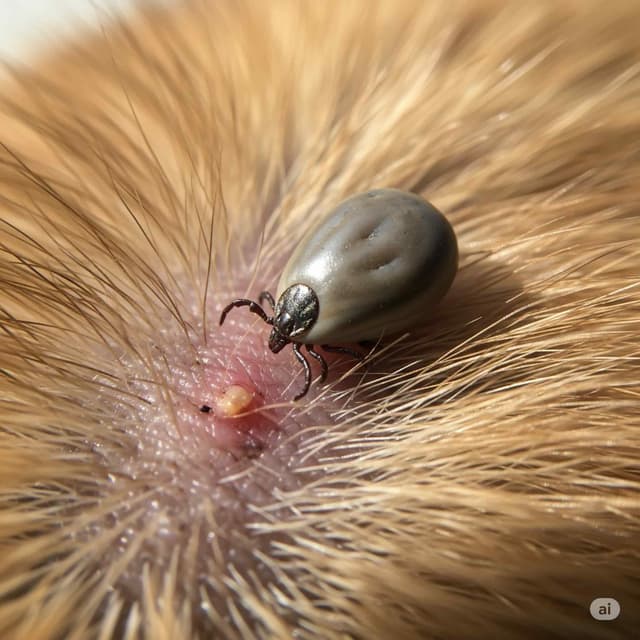
- Brown Dog Tick: Mud-colored; increases in size as it feeds on blood. Found on ears, neck, and paws. Can transmit ehrlichiosis and babesiosis.
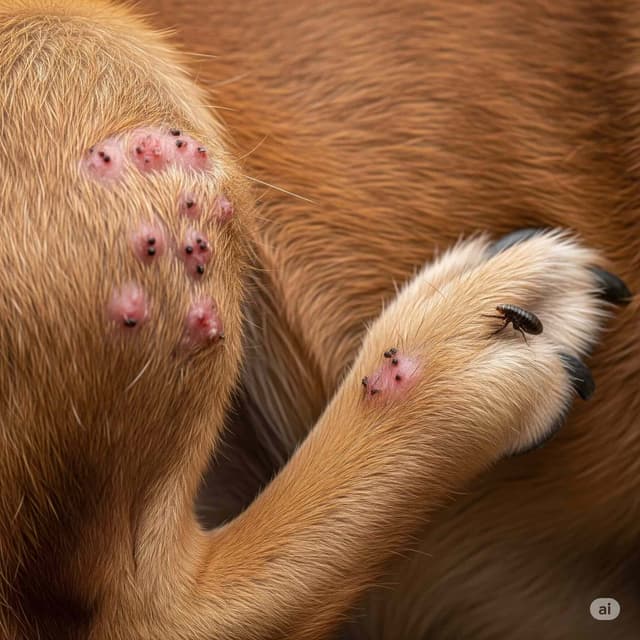
- Fleas (Ctenocephalides felis): Jumping insects causing itching, allergies, and transmitting tapeworms.
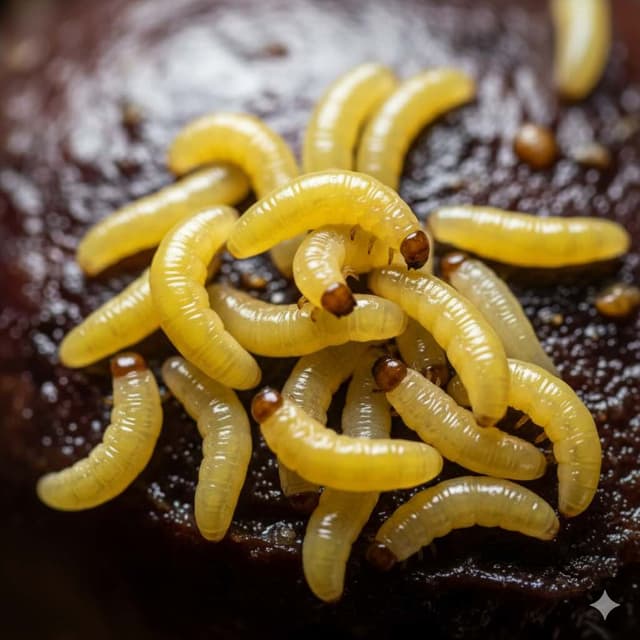
- Maggots: Fly larvae that infest open wounds and eat decaying flesh, causing intense pain and infection.
- Screwworms: Type of maggot that invades even fresh wounds and burrows deep into tissues.
- Mange Mites (Sarcoptic/Demodectic): Microscopic mites burrowing under the skin, causing hair loss, redness, and extreme itching.
Symptoms of Infestation
- Persistent scratching, biting, or licking
- Sores, redness, or scabs on the skin
- Visible worms or bugs on the body
- Unusual foul smell (especially in maggot-infested wounds)
- Hair loss or patchy bald spots
- Lethargy, fever, or anemia in extreme cases
Treatment Options
- Spot-on Treatments: Fiprofort Plus, Frontline Combo (once a month on neck)
- Oral Medication: Nexgard, Simparica (monthly chewable)
- Tick Collars: Seresto, Scalibor (long-lasting protection)
- Medicated Shampoos: Erina EP, Petcare Notix (weekly use)
- Maggot Wound Treatment: Clean wound with antiseptic; apply maggot-repelling cream (like Himax) and keep covered
- Mite Treatment: Use ivermectin under vet supervision; anti-mite shampoos like Sulphadene or Benzyl Benzoate
- Environment Cleaning: Disinfect bedding, floor, and garden area using pet-safe insecticides
Prevention Tips
- Inspect your dog regularly — especially after walks
- Maintain grooming and hygiene routines
- Use preventive sprays or powders (e.g., Bolfo powder)
- Keep bedding and surrounding areas clean and dry
- Use vet-approved tick/flea preventives consistently year-round